
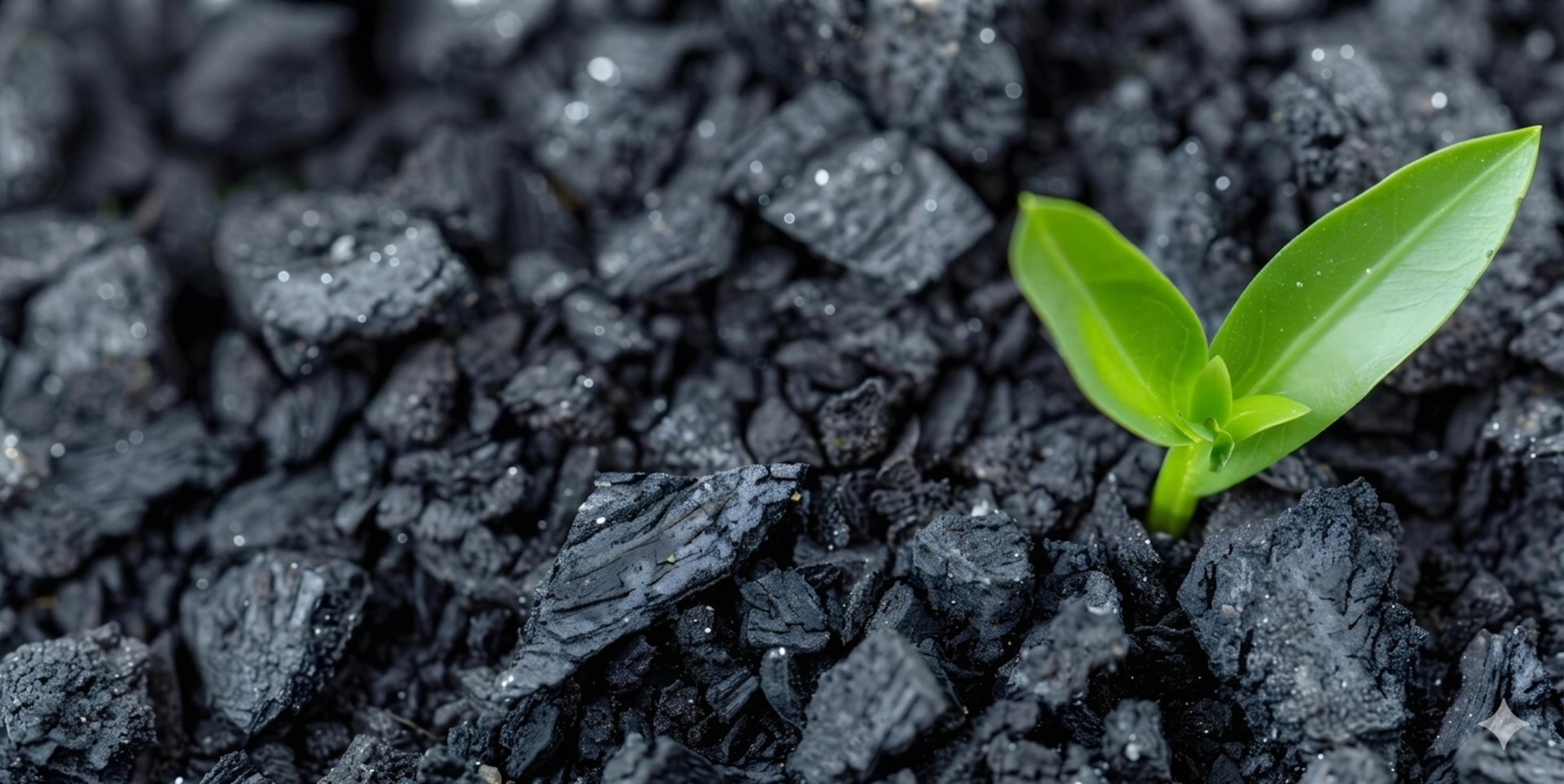
From Research to Practice
Publications That Have Shaped Our Work at Siena Carbon Group
Dilhani Perera (Ph.D.)
7/1/20263 min read
At Siena, we believe that meaningful environmental solutions must be grounded in both robust scientific evidence and practical, real-world experience.
Over the years, biochar has gained increasing attention from the scientific community, resulting in a substantial rise in research publications and technical studies examining its applications across diverse environmental and agricultural systems. This growing body of evidence has significantly deepened our understanding of sustainable land management, soil health, carbon farming, water-efficient practices, and broader environmental stewardship.
As scientific knowledge has advanced, interest in biochar has moved beyond academia into practical implementation. Landowners, local councils, industry groups, and other stakeholders are now exploring evidence-informed, sustainable solutions that incorporate biochar.
These publications and research developments have profoundly shaped the way we think, the questions we ask, the projects we design, and the services we deliver. We do not adopt new approaches simply because they are popular or emerging. Instead, we critically evaluate the available evidence, consider local context, and test how different methods perform under real-world Australian conditions. Together, we are working to bridge the gap between scientific research and practical on-ground application.
The publications and resources listed below represent key research and knowledge that have informed our thinking and continue to guide our ongoing work.
Carbon Stability & Climate Benefits
Adhikari, S. et al. (2024). Comparative analysis of biochar carbon stability methods and implications for carbon credits. Science of the Total Environment. DOI
Chagas, J.K.M. et al. (2022). Biochar increases soil carbon pools: Evidence from a global meta-analysis. Journal of Environmental Management. DOI
Woolf, D. et al. (2010). Sustainable biochar to mitigate global climate change. Nature Communications. DOI
Soil Health, Water Retention & Fertility
Edeh, I.G. et al. (2020). A meta-analysis on biochar’s effects on soil water properties. Science of the Total Environment. DOI
Kang, M.W. et al. (2022). Enhancement of soil physical properties and soil water retention with biochar-based soil amendments. Science of the Total Environment. DOI
Blackwell, P. et al. (2015). Influences of Biochar and Biochar-Mineral Complex on Mycorrhizal Colonisation and Nutrition of Wheat and Sorghum. Pedosphere. DOI
Nutrient Management & Slow-Release Fertilisers
Rasse, D.P. et al. (2022). Enhancing plant N uptake with biochar-based fertilizers. Plant and Soil. DOI
Glaser, B. & Lehr, V-I. (2019). Biochar effects on phosphorus availability in agricultural soils: A meta-analysis. Scientific Reports. DOI
Chew, J. et al. (2022). Biochar-based fertiliser enhances nutrient uptake and transport in rice seedlings. Science of the Total Environment. DOI
Vineyard & Waste Recovery
Cárdenas-Aguiar, E. et al. (2023). New insights into the production, characterization and potential uses of vineyard pruning waste biochars. Waste Management. DOI
Egri, D. et al. (2022). Vine pruning-derived biochar for agronomic benefits. Agronomy. DOI
García-Jaramillo, M. et al. (2021). Biochar addition to vineyard soils: effects on soil functions, grape yield and wine quality. Biochar. DOI
Environmental Remediation (including PFAS & Heavy Metals)
Liang, D. et al. (2024). A critical review of biochar for the remediation of PFAS-contaminated soil and water. Science of the Total Environment, 951, 174962. DOI
Ghorbani, M. & Amirahmadi, E. (2025). Optimizing biochar for heavy metal remediation: A meta-analysis of modification methods and pyrolysis conditions. Environments, 12(11), 399. DOI
Hu, B. et al. (2020). Efficient elimination of organic and inorganic pollutants by biochar and biochar-based materials. Biochar, 2(1), 47-64. DOI
Murtaza, G. et al. (2024). Physicochemical properties and performance of non-woody derived biochars for the sustainable removal of aquatic pollutants. Chemosphere, 359, 142368. DOI
Wang, C. et al. (2021). A review on persulfates activation by functional biochar for organic contaminants removal. Journal of Environmental Chemical Engineering, 9(5), 106267. DOI
Dai, Y. et al. (2020). Utilization of biochar for the removal of nitrogen and phosphorus. Journal of Cleaner Production, 257, 120573. DOI
Sadeghi, S.H. et al. (2016). Controllability of runoff and soil loss from small plots treated by vinasse-produced biochar. Science of the Total Environment, 541, 483-490. DOI
Practical Applications & Australian-Relevant Research
Omidvar, N. et al. (2025). Combination of Biochar-Based Fertilisers and Reactive Barriers Improved Soil Carbon Storage, Soil Moisture Retention, and Crop Yield. Global Change Biology Bioenergy. DOI
Solaiman, Z.M. et al. (2025). Co-application of biochar and phosphorus increases soil microbial biomass, mycorrhizal colonization, growth, and nutrition of subterranean clover. AIMS Microbiology. DOI
Research is rarely the final answer—it is often the starting point for asking better questions and developing better solutions.
At Siena, we are interested in translating scientific knowledge into practical outcomes and contributing to the conversation around sustainable environmental practices.
If any of these publications align with your interests, or if you would like to learn more about how they relate to our work, we would be pleased to discuss them further and share insights gained through our experience and learning over the years.
We welcome conversations with landholders, researchers, industry partners, and anyone interested in environmental innovation.
Thank you for following our journey.
— Siena Carbon Group
Siena Carbon Group
info@sienacarbongroup.com
Privacy Policy | ABN: 17 054 537 147 | © 2024. All rights reserved. Powered by Logos Creative Solutions.
Servicing NSW & Riverina Region